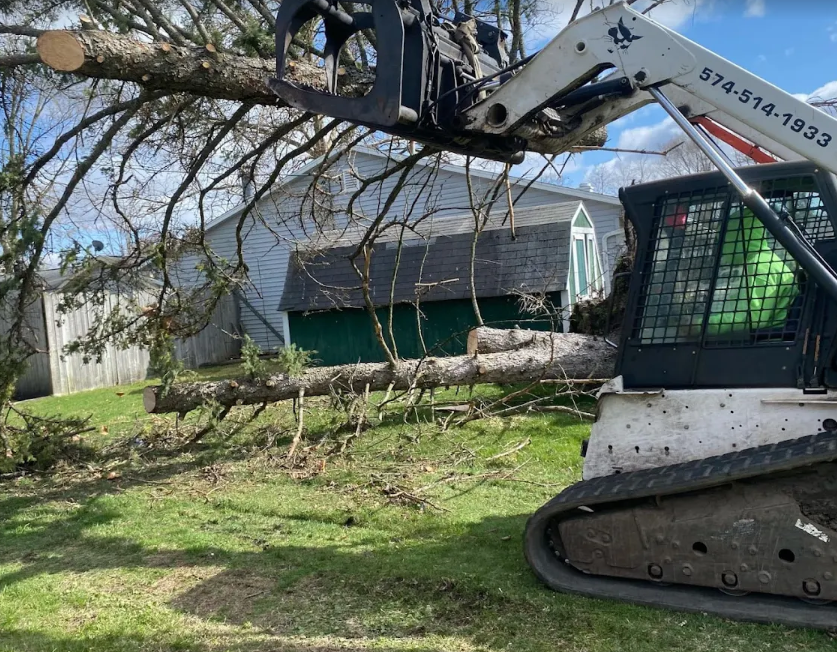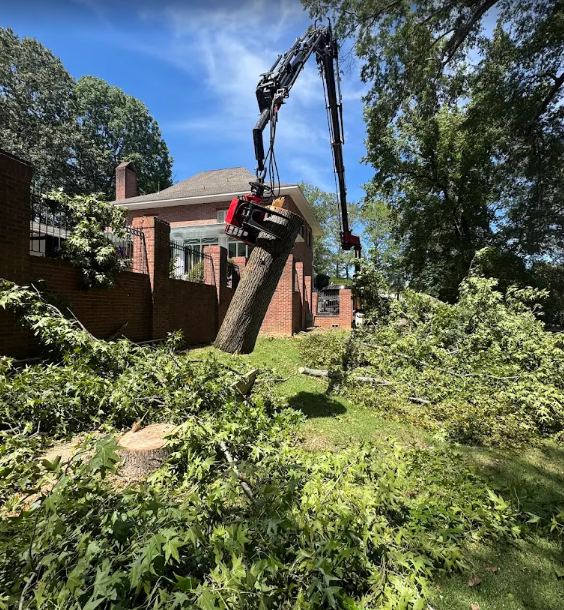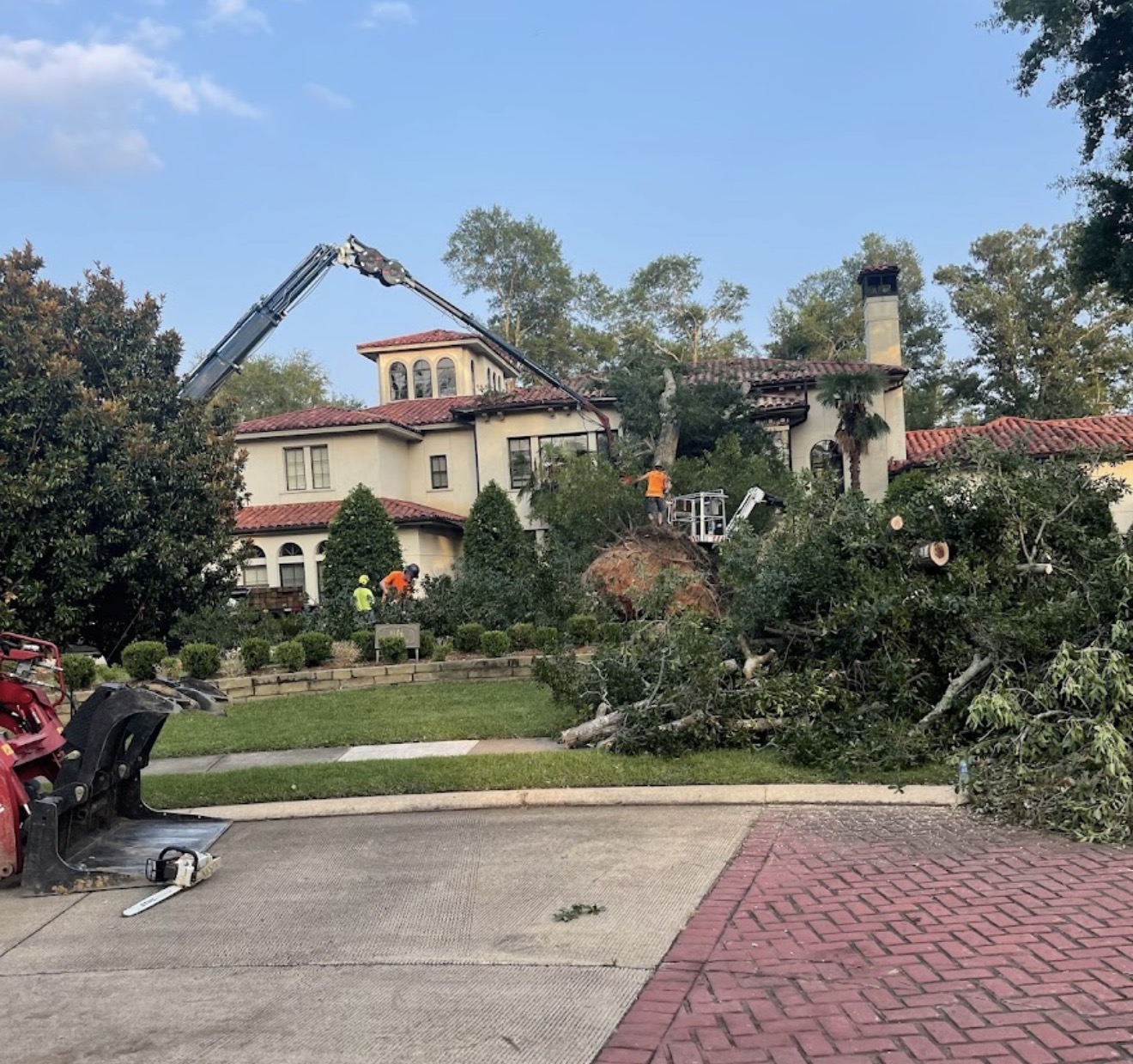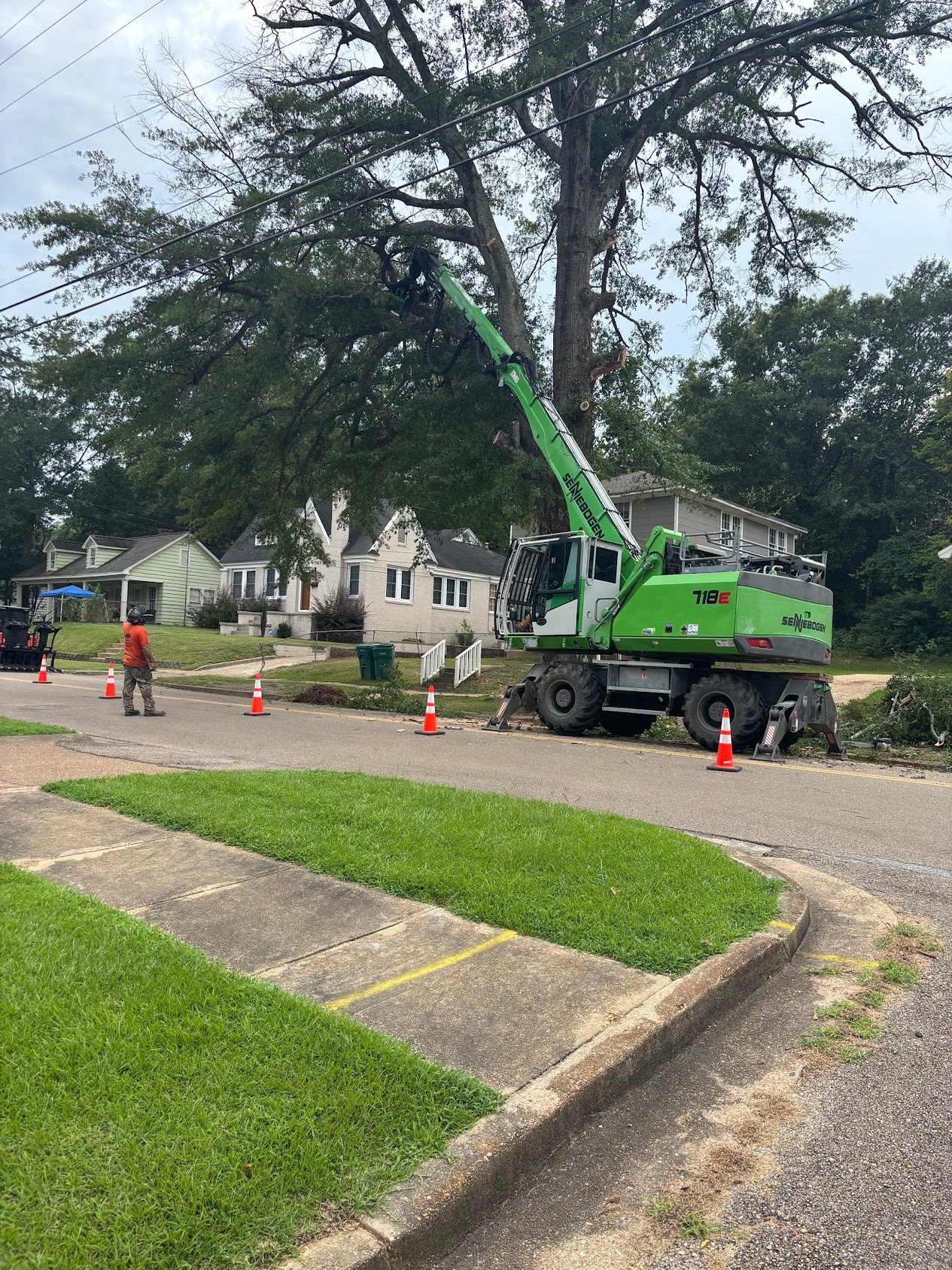
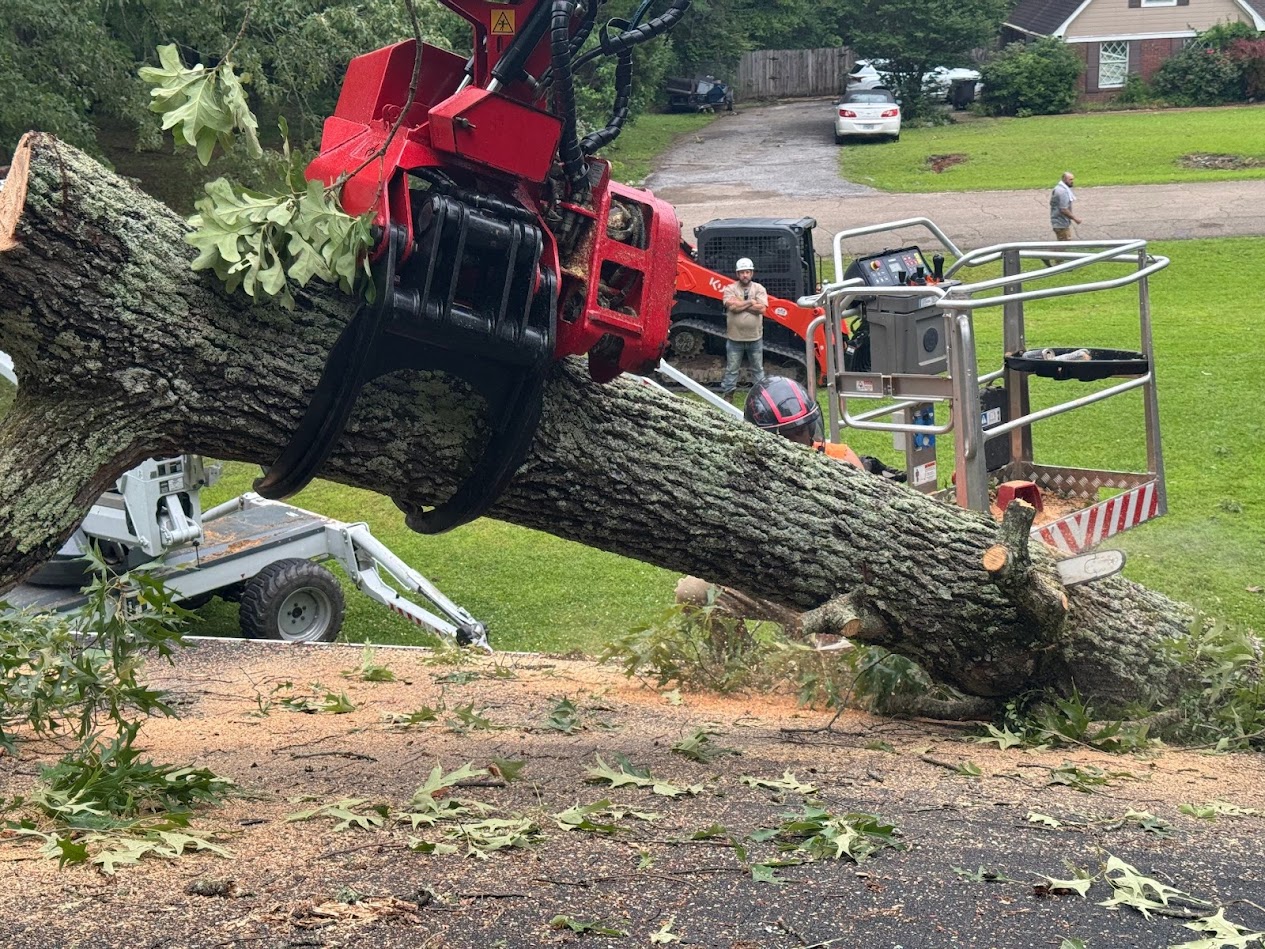
A tree in Lowndes County generally needs removal when it has significant trunk decay, a heaving root plate, more than a third dead canopy, a split union over a target, or fungal conks at the root flare.
1. Fungal conks at the root flare
Shelf fungus at the base of a water oak or pine is the outward sign of internal root and butt rot. By the time conks are visible the decay is usually well established. This is the single most reliable removal indicator we see in Columbus.
2. A heaving or cracked root plate
Soil lifting on the side opposite the lean, or a crescent crack in the turf around the base, means the root plate is already moving. After a wet Mississippi spring this can happen on a tree with a perfectly green canopy.
3. More than a third of the canopy dead
Progressive dieback from the top down usually signals root damage, construction impact or decline the tree will not recover from. Below roughly two thirds live canopy, removal is generally the better investment than repeated pruning.
4. Included bark at a major union
Codominant stems with bark pinched between them are structurally weak. On a mature pecan or sweetgum over a roof, that union is where the tree will split in a thunderstorm.
5. The target changed, not the tree
A leaning pine over open pasture is a tree. The same pine after you build a shop under it is a hazard. Tree risk is always tree condition plus what is underneath it.
Related questions
Need eyes on a specific tree? Request a free written estimate or read about tree removal in Columbus.