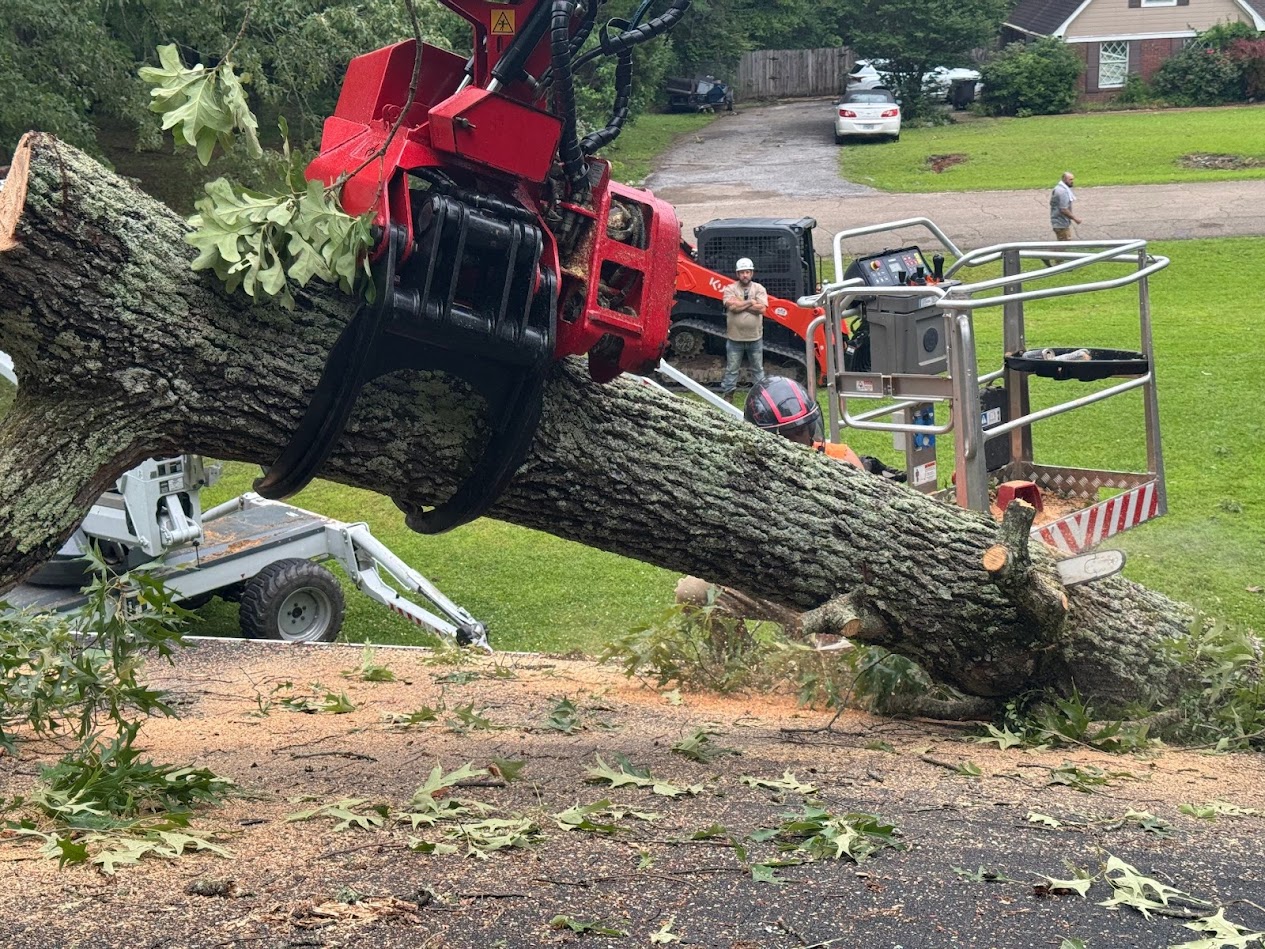
Prune when the tree is structurally sound and the problem is limbs: deadwood, roof contact, clearance or end weight. Remove when the defect is in the trunk or root plate, when more than a third of the canopy is dead, or when the tree is dead.
Look at where the defect is
Problems in the branches are usually correctable. Problems in the trunk, the root flare or the root plate usually are not. Pruning can take weight off a long horizontal oak limb over the driveway. Pruning cannot restore strength to a hollow trunk or reseat a lifting root plate.
Cases that are almost always pruning
Limbs touching the roof, chimney or service drop. Deadwood and hangers in an otherwise healthy canopy. Low limbs blocking the drive or sidewalk. A young tree with two competing leaders that can still be trained to one.
Cases that are almost always removal
Shelf fungus at the base. A fresh lean with soil heaving on the opposite side. A split at a codominant union over a structure. Standing dead pine within reach of the house. More than a third of the canopy dead and declining year over year.
The expensive middle ground
Topping is not a substitute for removal. Cutting a mature hardwood back to stubs produces weakly attached regrowth and decay pockets, and the tree usually fails within a few storm seasons anyway. If a tree is too far gone to prune properly, removing it once costs less than topping it and then removing it later.
Related questions
Need eyes on a specific tree? Request a free written estimate or read about tree removal in Columbus.