Move everyone away from the structure, assume any downed wire is live and call the utility and 911, do not climb on or cut a loaded tree, photograph everything before it moves, then open the insurance claim and call a crew for mitigation.
1. People first, then power
Get everyone out from under the affected part of the structure. Treat every downed or sagging wire as energized, including cable and phone lines that may be in contact with a conductor. Call 911 and the utility before anyone approaches the tree. Utility clearance is their call, not a tree crew's.
2. Do not cut a loaded tree
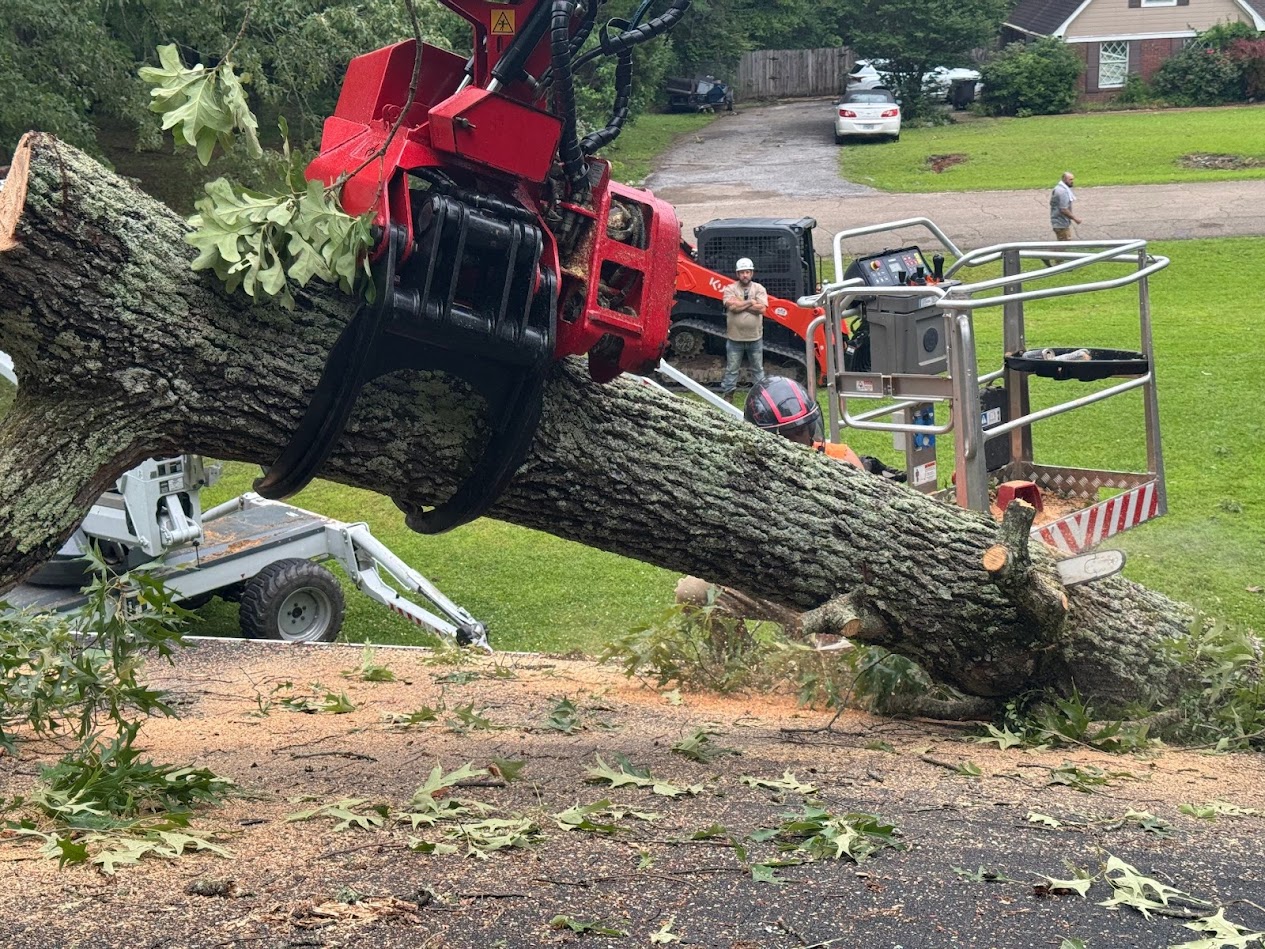
A trunk bent across a roof or pinned against a fence is storing energy. Cutting into it releases that energy in a direction that is hard to predict, and this is where most homeowner chainsaw injuries happen. Bent saplings, pinned limbs and split trunks are all in this category. Leave it.
3. Photograph before anything moves
Wide shots, the impact point, the root plate, the interior damage and any water entry. Once a crew starts lifting, that record is gone, and it is the record your adjuster works from.
4. Mitigate, then repair
Carriers expect you to prevent further damage: tarp the opening, shut off water to a damaged line, keep the receipts. Emergency mitigation and full removal should be billed as separate lines because carriers treat them differently.
5. Call while the crew is still local
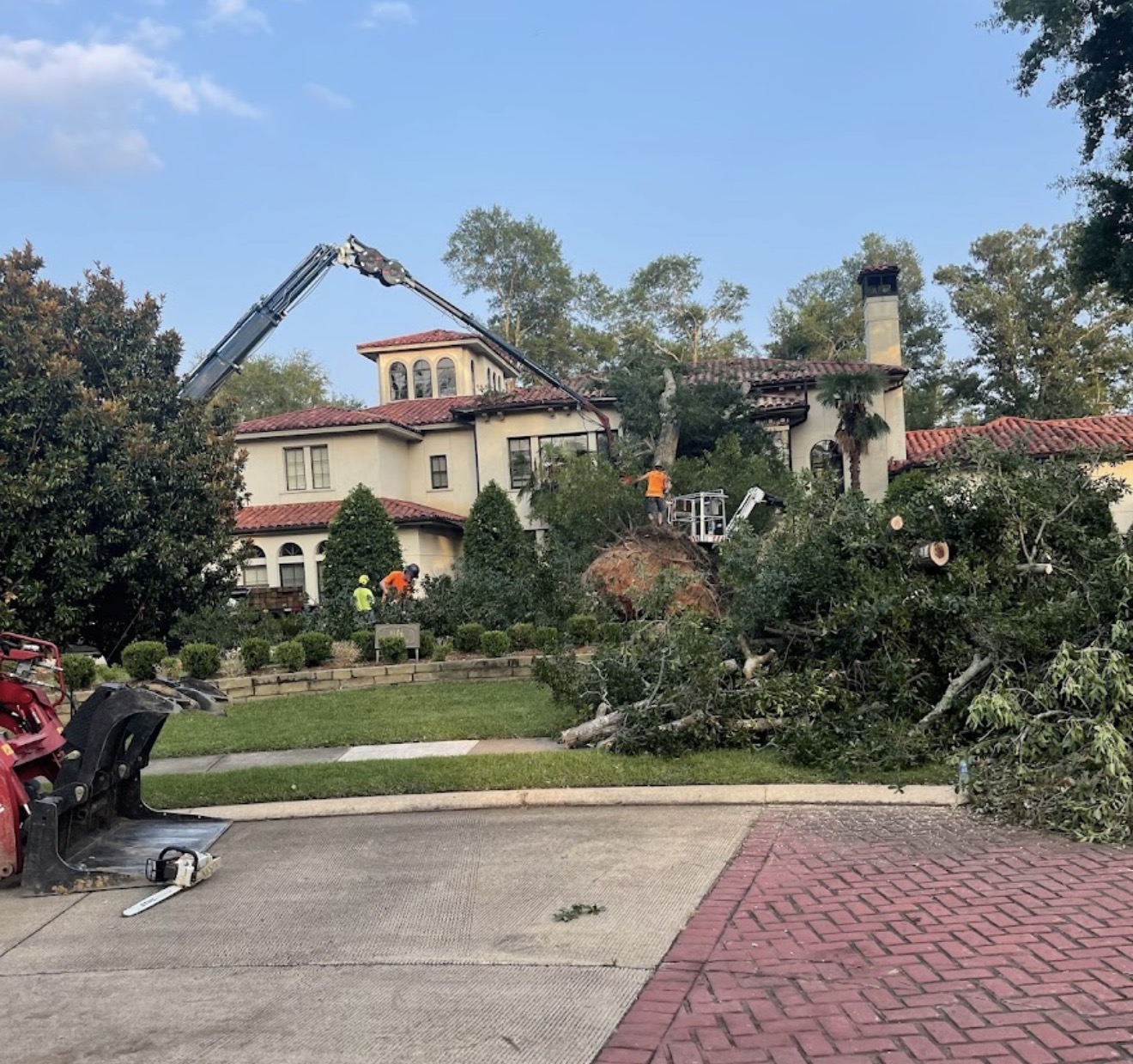
After a widespread event in Lowndes County, crews triage by hazard. Trees on occupied structures and blocked roadways get worked first. Calling early puts you in that queue rather than behind it.
Related questions
Need eyes on a specific tree? Request a free written estimate or read about tree removal in Columbus.